Recovery
What cold water actually does
Cold water immersion has been around for a long time. The Finns have known about it for centuries. What has changed recently is the volume of research behind it and the growing number of people using it deliberately rather than just tolerating it.

Written by
Marcus Reid
Strength Specialist
What happens in the body
The mechanism is straightforward. When you enter cold water the blood vessels near the skin constrict rapidly. The body pulls blood toward the core to protect the vital organs. When you get out the vessels dilate again and blood moves back through the body with increased efficiency.
That process reduces localised inflammation in worked muscle tissue. It accelerates the clearance of metabolic waste. It also produces a significant spike in norepinephrine, a neurotransmitter involved in focus, mood regulation and alertness. A two minute session can produce an effect that lasts several hours. That is not a subjective impression. It is a measurable neurochemical response.
The body also releases a modest amount of dopamine during cold exposure. Not at the level of drugs or alcohol but meaningfully above baseline. That is partly why people who use cold water immersion regularly report that it becomes something they look forward to rather than dread.
The inflammation question
Cold water immersion is particularly effective at reducing acute inflammation. After a hard training session the muscles are inflamed as part of the repair process. That inflammation is necessary to a point. Beyond that point it becomes a drag on recovery rather than a part of it.
Cold exposure helps the body manage that balance. It reduces the inflammation that is slowing recovery down without interfering with the repair process itself. The result is that the body moves through the recovery cycle faster and is ready to train again sooner.
There is a nuance worth knowing here. Cold water immersion used immediately after strength training can blunt some of the hypertrophic response, meaning the stimulus for muscle growth. For people whose primary goal is building muscle mass the timing matters. Using the ice bath a few hours after training rather than immediately after captures the recovery benefit without interfering with the adaptation signal.
For everyone else the timing is less critical. The benefits of consistent use outweigh the precision of scheduling.
The mental side
The physical effects get most of the attention but the mental dimension is just as significant for most people who use cold water immersion regularly.
The two minutes before you get in are genuinely uncomfortable. The body resists. The mind produces a convincing list of reasons to skip it. Getting in anyway is a small act of deliberate discomfort that most people find carries over into other areas of their day. Not in a motivational sense. More in the sense that the threshold for difficulty shifts slightly after you have already done something hard before nine in the morning.
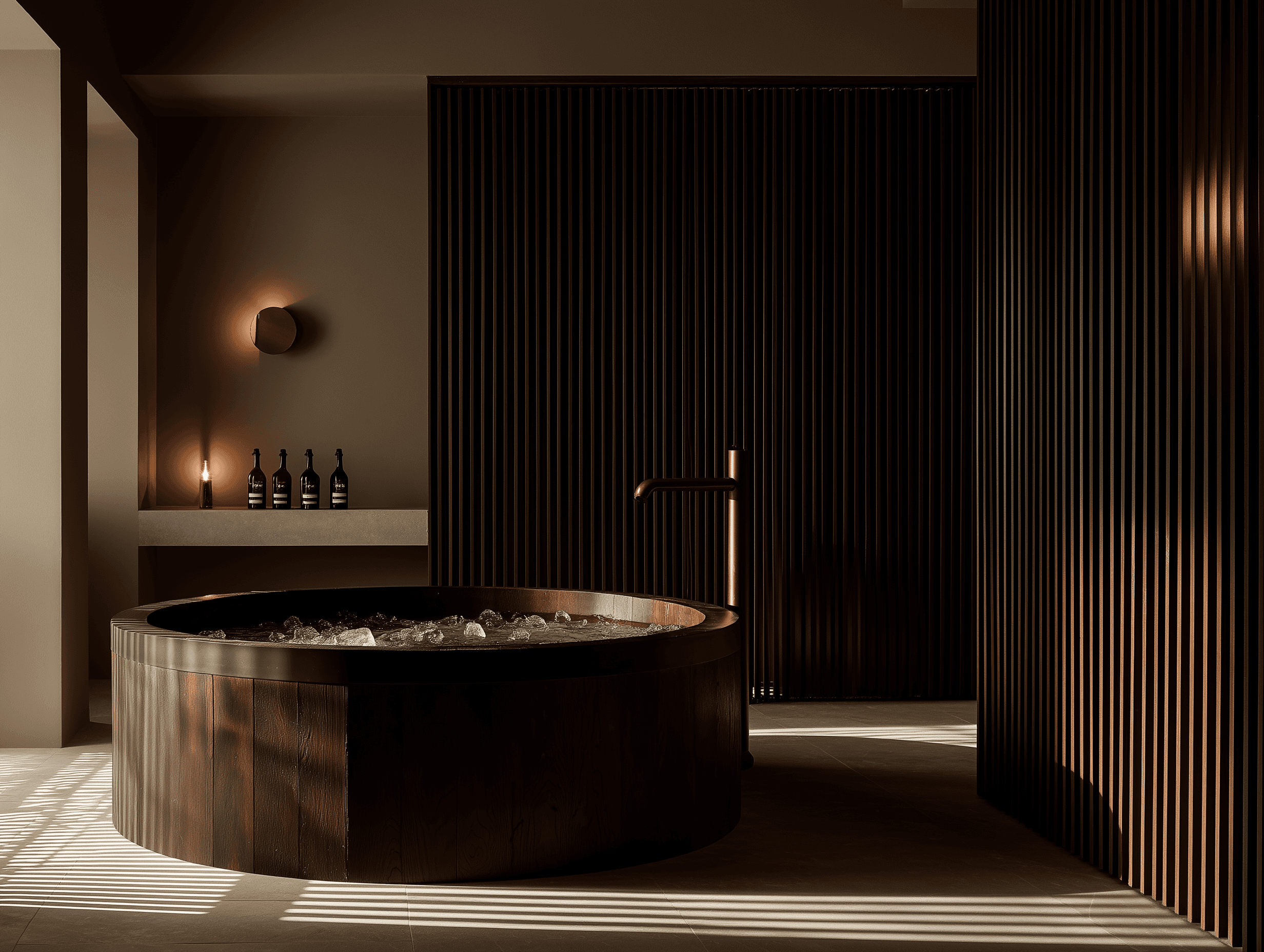
Members at Vēla use the ice bath at different points in their day for different reasons. Some use it after a movement session as part of a recovery sequence. Others use it first thing as a way of starting the day with clarity. Both approaches work. The consistency matters more than the timing.
How to start
The instinct when starting out is to think that longer means better. It does not. Two to four minutes at the right temperature is enough to produce the physiological response. Beyond that the additional benefit is marginal and the discomfort is not.
Cold exposure is safe for most people. If you have a cardiovascular condition or any heart related concerns it is worth checking with a doctor before starting. For everyone else the barrier is psychological rather than physical.
At Vēla introductory sessions are available for members new to cold exposure. The team will walk you through the process, the breathing and what to expect. Most people find the second session significantly easier than the first. By the third it starts to feel normal.
That is usually when it starts working.
Consistency over intensity
The research on cold water immersion is clear on one thing. Regular short sessions produce better results than occasional long ones. Two minutes three times a week over a month does more than a ten minute session once a fortnight.
The body adapts to consistent stimulus. The cardiovascular response becomes more efficient. The norepinephrine spike remains but the recovery between sessions gets faster. Over time the practice becomes genuinely restorative rather than just challenging.
That is the point Orlo members tend to reach after a few weeks of consistent use. The ice bath stops being something they get through and starts being something they rely on. The distinction matters. A recovery practice only works if you actually do it.